I know that when you're driving, you are never tempted to look at your phone — not you, this never happens. And this is precisely why Toyota Pre-Collision System is here to help. Not you… the other drivers, of course. 😉
PCS helps drivers with emergency braking and audio and visual warnings. The system works to mitigate frontal collisions by detecting vehicles, pedestrians, and bicyclists before impact becomes unavoidable.
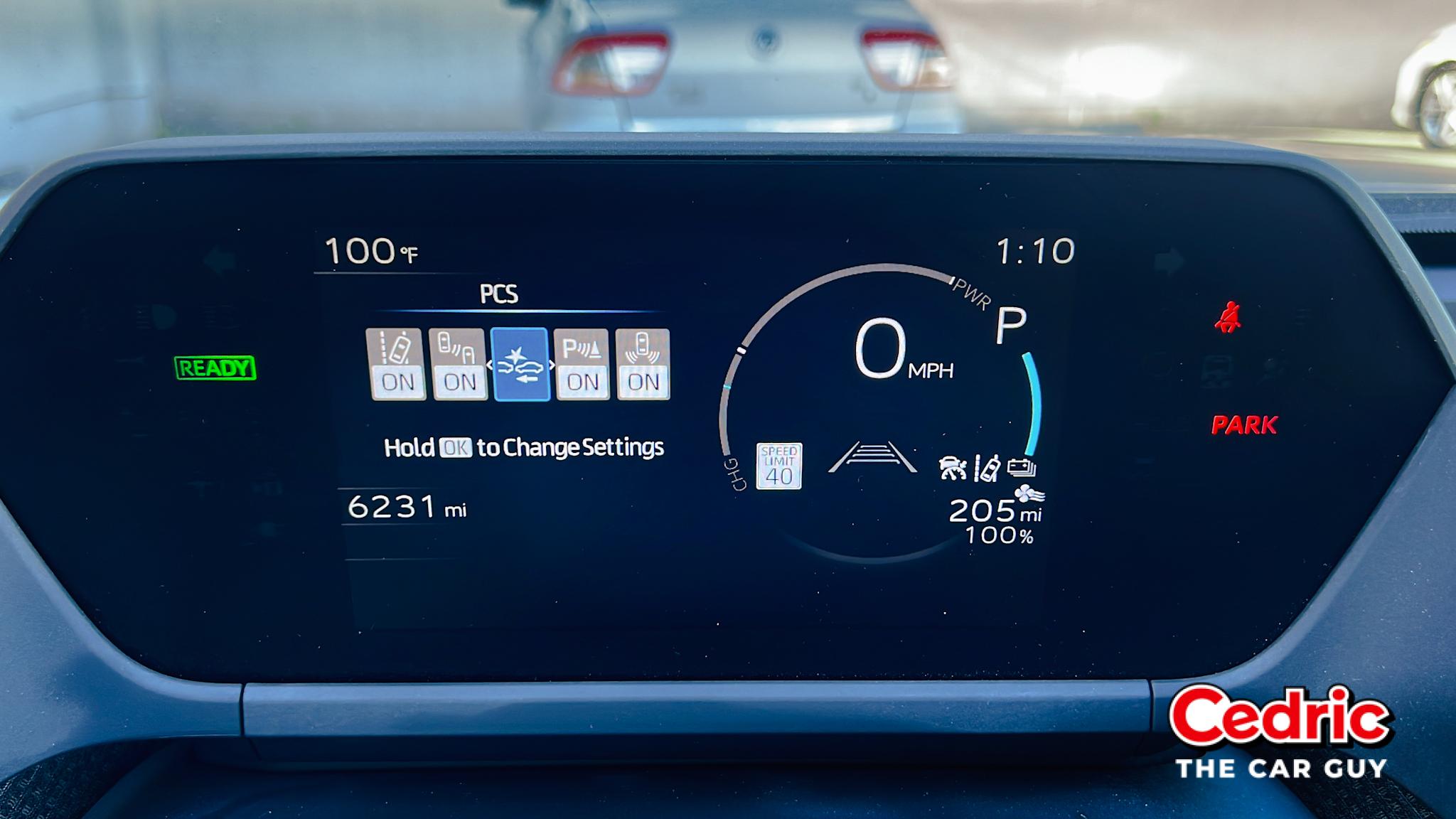
How Does Toyota Pre-Collision System Work?
The Pre-Collision System is an advanced safety feature designed to mitigate and avoid frontal collisions. It can detect vehicles, pedestrians, and bicyclists — and it doesn't wait for the driver to react first.
When PCS determines a frontal collision is likely, the driver gets an audible alert buzzer and a bright red flash on the multi-information display showing a brake sign. From there, the system steps up further. You'll begin to hear and feel Toyota Brake Assist activate — the vehicle decelerates on its own, and brake force increases beyond whatever pressure you're applying to the pedal. This is Automatic Emergency Braking, and it can be the difference between a close call and a collision.
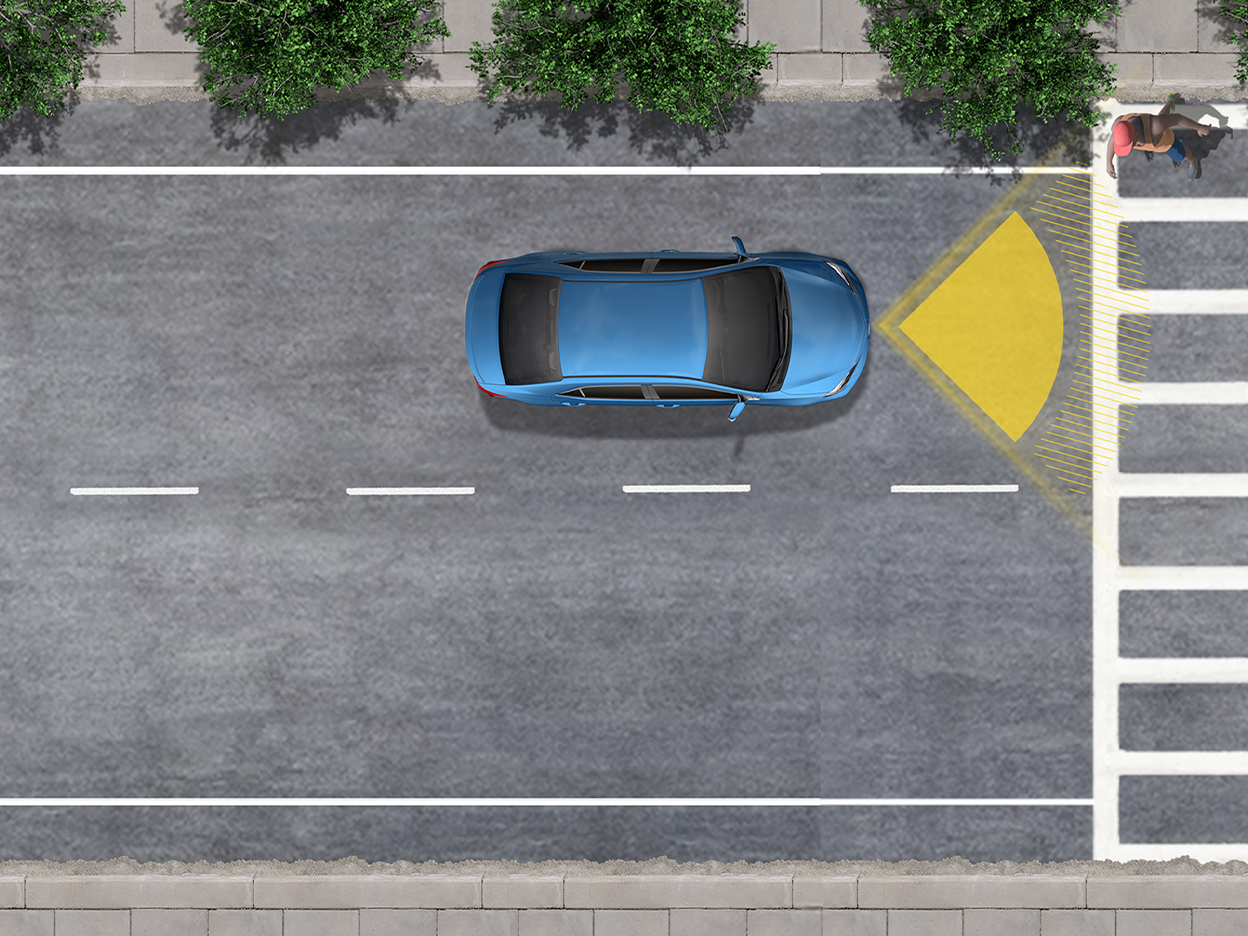
Toyota's Pre-Collision System Update (2023)
As of 2023, select vehicles receive enhanced intersection support — improving the system's detection range and capability. In certain circumstances, this includes detecting oncoming vehicles in multiple lanes when turning at an intersection. The updated PCS is also better equipped to detect lateral approaching vehicles and can now identify motorcyclists in specific situations.
Main Components of PCS with Pedestrian Detection
PCS relies on two core systems working together:
- Millimeter Wave Radar — Detects vehicles and objects directly ahead, continuously analyzing speed and distance to determine whether a collision is probable.
- Front-Facing Wide-Angle, High-Resolution Camera — Sees and recognizes vehicles, pedestrians, and bicyclists in the vehicle's path.
Both systems interact with the Toyota Star Safety System to either avoid a collision entirely or minimize the impact when avoidance isn't possible.
I remember the first time I actually experienced the Pre-Collision System for myself. I was driving from Riverside to Ontario — delivering a customer's vehicle — and hit bumper-to-bumper traffic on the way. I noticed the vehicle was braking on its own. Not dramatically, but I could feel it: the brakes engaging more than the pressure I was applying to the pedal, slowing the car down on its own to maintain distance from the vehicle ahead.
That was the moment it clicked for me. Even in slow-moving stop-and-go traffic, the system was quietly doing its job — applying more brake force than I was, every single time we had to decelerate. I remember thinking: this is a really good feature to have. Especially for the moments when you're a little slow to react and the car picks up the slack before you even realize it.
How to Use the Pre-Collision System
Toyota PCS is generally programmed on by default at time of delivery. If it's ever off or needs to be adjusted, here's how to access it:
- Use the directional pad on the left side of the steering wheel to navigate the Multi-Information Display menus.
- Navigate to the Settings menu and scroll down to the PCS setting.
- Press the OK/Selector button in the center of the directional pad. On some vehicles this toggles PCS on/off with a single press; on others, you'll need to press and hold.
- The PCS system will display a yellow or white icon showing a vehicle being rear-ended with a star above and an arrow below. If this icon is not visible, the system is working correctly.
- For fine-tune adjustments to warning timing or sensitivity, use the directional pad and OK/Selector to navigate the PCS sub-menu settings.
- If the icon appears and you cannot turn it off, see your local Toyota dealer.


Get the Car Buying Secrets Guide — Free
Before you buy your next Toyota or any other vehicle, make sure you understand how the buying process actually works from the inside. Free PDF, instant download.
Download Free PDF →Benefits of Toyota Pre-Collision System
- Early Warning — Radar and cameras detect potential hazards ahead and alert the driver with visual and audio signals before the situation becomes critical.
- Automatic Braking — If warnings go unanswered, the system can apply brakes automatically to reduce speed and minimize impact — or avoid a collision entirely.
- Increased Reaction Time — Early alerts give the driver more time to respond appropriately before the situation escalates.
- Adaptive Features — Advanced versions of PCS can adapt to conditions like rain or fog, maintaining detection capability in reduced visibility.
- Lane Departure Integration — Some PCS configurations also work alongside Lane Departure Alert for broader frontal and lateral protection.
- Peace of Mind — Knowing the system is continuously monitoring the road ahead makes driving less stressful — especially in heavy traffic.
- Enhanced Safety — Contributes directly to a safer driving experience by reducing the likelihood of frontal collisions and associated injuries.
- Potential Insurance Discounts — Some insurers offer discounts on vehicles equipped with advanced safety systems like PCS.
- Driver Awareness — Over time, regular exposure to PCS alerts can reinforce more attentive driving habits.
- Integrated Systems — Works alongside Dynamic Radar Cruise Control for a more comprehensive approach to road safety.
PCS is there to help you react faster — not to give you permission to pay less attention. Too many drivers get comfortable knowing the vehicle has emergency braking and start assuming the car will save them every time. Keep your eyes up, stay off your phone, treat PCS as backup protection rather than your first line of defense, and learn what the alerts look and sound like before you actually need them. The best safety feature in any car is still an attentive driver.
Pre-Collision System (PCS) & Toyota Safety Sense
The Pre-Collision System is part of the Toyota Safety Sense suite, which works as a coordinated system of driver-assistance features. No system replaces attentive driving — these technologies are designed to assist, not to substitute for the driver's responsibilities on the road.
- Automatic High Beams (AHB) — Automatically switches between high and low beams based on surrounding traffic conditions.
- Road Sign Assist (RSA) — Detects and displays road signs to keep the driver more aware of current speed limits and conditions.
- Lane Departure Alert (LDA) — Warns drivers of unintentional lane departure and may provide corrective steering assistance.
- Pre-Collision System (PCS) — Detects vehicles, pedestrians, cyclists, and motorcyclists, providing warnings and emergency braking if needed.
- Dynamic Radar Cruise Control (DRCC) — Maintains a set following distance from the vehicle ahead, automatically adjusting speed.
- Lane Tracing Assist (LTA) — Keeps the vehicle centered in its lane using lane markers and the vehicle ahead as reference points.
- Proactive Driving Assist (PDA) — Provides braking and steering support to maintain following distance and help stay within the lane.
Read more details on Toyota Safety Sense 3.0 →

The Car Buying Secrets Book — $19
Know your features, know your leverage. 25 years of dealer insider knowledge on how to evaluate a vehicle and walk out of any dealership with the deal you deserve.
Get the Book — $19 →Frequently Asked Questions
What is the Pre-Collision System with Pedestrian Detection?
PCS is designed to mitigate frontal collisions using a radar and camera system to detect vehicles, pedestrians, and bicyclists. It provides audible and visual warnings, and in the event of a probable crash, can apply Automatic Emergency Braking to help avoid or reduce the severity of a collision.
What does "Pre-Collision System Unavailable" mean?
This warning typically means one of the two detection systems — the front-facing camera or the radar — can't function properly. Check that the radar area behind the Toyota emblem or grille panel is clean, and that the camera housing area on the windshield behind the rearview mirror is unobstructed. Weather conditions like heavy rain, snow, or wind can also temporarily disrupt the system.
Where is the Pre-Collision System sensor located?
PCS uses two sensors. The camera is mounted on the windshield behind the rearview mirror housing. The radar is located behind the Toyota emblem on the front of the hood — or on some vehicles, behind a tinted clear panel within the front grille.
Can a Pre-Collision System be added aftermarket?
Aftermarket alternatives exist, but proceed with caution and research thoroughly. Most late-model Toyota vehicles include Toyota Safety Sense with PCS as standard equipment going back to 2016. The GR86 and GR Supra have their own PCS configuration outside of the Toyota Safety Sense branding.