Toyota's Traction Control (TRAC) system is designed to help improve driving stability and control on slippery or uneven road surfaces. The system monitors wheel spin and helps keep the drive wheels from losing control — especially when accelerating from a stop or driving on wet, icy, or loose surfaces.
Traction Control can even be temporarily disabled in situations where some wheel spin is actually necessary, such as freeing a vehicle stuck in mud or loose snow.
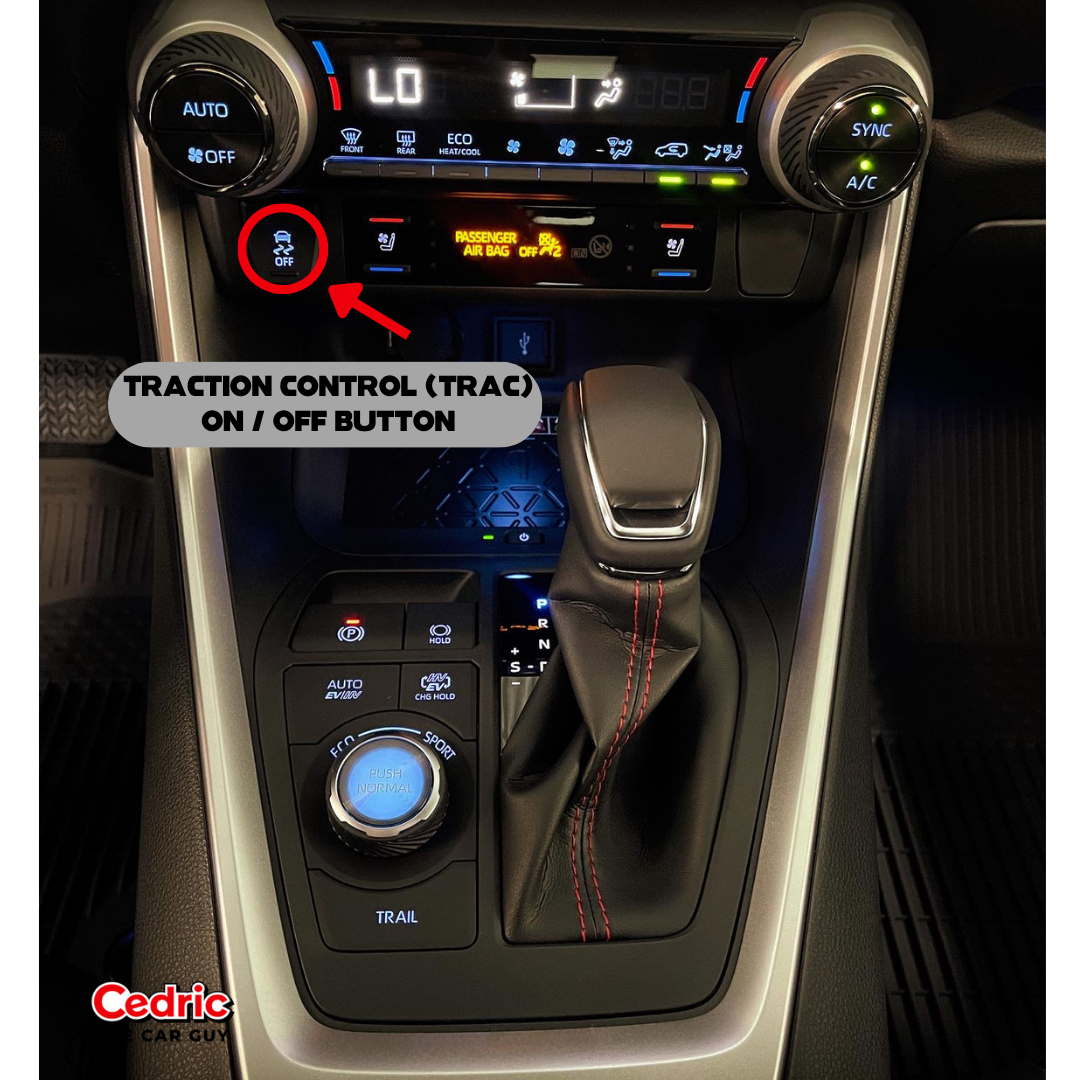
What Is Toyota Traction Control (TRAC)?
Toyota Traction Control is a system that helps prevent the drive wheels from spinning during acceleration. If the system detects that one wheel is spinning faster than the others — losing traction — it automatically reduces engine power or applies brake pressure to that wheel to restore grip and forward momentum.
The goal is simple: help the vehicle maintain stability, control, and forward movement on surfaces where traction is unreliable.
How Toyota Traction Control (TRAC) Works
Without traction control, a drive wheel on a slippery surface may spin freely while the vehicle barely moves. Toyota's TRAC system uses four components working together to prevent this:
- Wheel speed sensors
- Electronic Control Unit (ECU)
- Anti-Lock Brake System (ABS)
- Engine throttle control
The ECU constantly monitors each wheel's speed during acceleration. If one drive wheel spins noticeably faster than the others, the system detects the loss of traction and responds by applying brake pressure to the spinning wheel via ABS, reducing engine power by adjusting the throttle, and redirecting power toward the wheel with the most available grip.
The result is smoother, more controlled acceleration — even when the road surface is working against you.
Most drivers don't realize how often traction control is working in the background. You'll notice it most when accelerating in rain, snow, gravel, or when pulling away from a stop sign on a wet road. If you feel the vehicle hesitate or see a traction control light flashing during acceleration, the system is actively working to prevent wheel spin and keep you in control. That's it doing exactly what it's supposed to do.
One of the most common questions I'd get about traction control was: "Can I use this in snow? Is it kind of the same as having 4-wheel drive or AWD?" And I always made sure to clear that up directly — because it matters.
Traction control and all-wheel drive are two completely different things. Traction Control helps you maintain control and stability while accelerating — it monitors wheel spin and manages power delivery to keep you on your intended course. All-wheel drive or 4x4 physically sends power to all four wheels to help the vehicle move through difficult terrain or slippery conditions. They address different problems in different ways.
Traction control is standard on many vehicles and works in the background constantly. AWD or 4WD is a drivetrain configuration that changes how power is physically distributed. You can have traction control without AWD, and AWD without traction control being the primary advantage. Knowing the difference helps you make a smarter decision when choosing which setup actually fits how and where you drive.
Benefits of Toyota Traction Control (TRAC)
- Enhanced Traction — Automatically engages when wheel spin is detected, directing power to the wheels with the most grip.
- Improved Safety — Reducing wheel spin in slippery conditions helps prevent skids and loss of control before they develop.
- Better Acceleration on Slippery Roads — Manages power delivery so the vehicle can accelerate smoothly without excessive wheel spin eating into forward momentum.
- Optimal Power Distribution — Applies brake force to specific wheels and adjusts engine output to put power where traction is actually available.
- Confidence in Various Conditions — Rain, snow, gravel, mud — TRAC helps drivers stay in control across a wide range of difficult surfaces.
- Reduced Tire Wear — Limiting excessive wheel spin reduces unnecessary wear on the drive tires over time.
- Uphill Start Assistance — Helps prevent wheel spin when starting on slippery inclines where traction is most critical.
- Works With Other Safety Systems — Integrates with ABS and Vehicle Stability Control (VSC) for a comprehensive stability and traction network.
Get the Car Buying Secrets Guide — Free
Before you buy your next Toyota or any other vehicle, make sure you understand how the buying process actually works from the inside. Free PDF, instant download.
Download Free PDF →Traction Control (TRAC) and the Toyota Star Safety System
Traction Control is one of six interconnected features in Toyota's Star Safety System:
- Anti-Lock Brake System (ABS) — Prevents wheel lock-up during hard braking to maintain steering control.
- Electronic Brake-Force Distribution (EBD) — Adjusts braking force to each wheel based on load and weight transfer.
- Brake Assist (BA) — Detects panic braking and increases pressure to help stop faster.
- Smart Stop Technology (SST) — Reduces engine power when brake and accelerator are simultaneously pressed.
- Traction Control (TRAC) — Prevents drive wheel spin during acceleration on low-traction surfaces.
- Vehicle Stability Control (VSC) — Helps keep the vehicle on its intended path during cornering or sudden maneuvers.
Recap of Toyota Traction Control (TRAC)
Toyota's Traction Control system helps prevent the drive wheels from spinning during acceleration on slippery or uneven surfaces. Using wheel speed sensors, engine power control, and the ABS braking system, TRAC distributes power to the wheels with available grip and keeps the vehicle moving in the intended direction.
It's worth remembering that no system can override the laws of physics. Traction control is a powerful tool — but proper tires, safe driving habits, and awareness of road conditions are still essential. TRAC is there to help you, not to replace good judgment behind the wheel.
The Car Buying Secrets Book — $19
Know your features, know your leverage. 25 years of dealer insider knowledge on how to evaluate any vehicle and walk out of the dealership with the right deal.
Get the Book — $19 →Frequently Asked Questions
Is traction control good for snow?
Yes. Traction control helps reduce wheel spin on snowy or icy roads by reducing engine power and applying brake force to spinning wheels. It's particularly useful when accelerating from a stop on slippery surfaces — though it's not a substitute for AWD or winter tires in severe conditions.
How do you reset the traction control light?
Most Toyota vehicles have a traction control button showing a vehicle with skid marks behind it. Pressing this button toggles traction control off, illuminating the TRAC OFF light on the dashboard. Press the button again to re-enable it. If the light comes on without pressing the button, the system may need service.
What causes the traction control light to come on?
The light may flash while the system is actively preventing wheel spin during acceleration — that's normal operation. If the light stays on continuously without flashing, it may indicate a system malfunction that should be inspected.
Does traction control slow the car down?
Traction control may reduce engine power when wheel spin is detected, which can feel like a brief hesitation during acceleration. This is intentional — it's trading a momentary slowdown for improved traction and control.
Does traction control use more gas?
Traction control is not designed to significantly affect fuel economy. Its purpose is maintaining traction and stability, not managing fuel use. Any minor fuel impact would be negligible compared to the safety benefit it provides.